Paper Vases: Aesthetically Edgy, Morally Sound

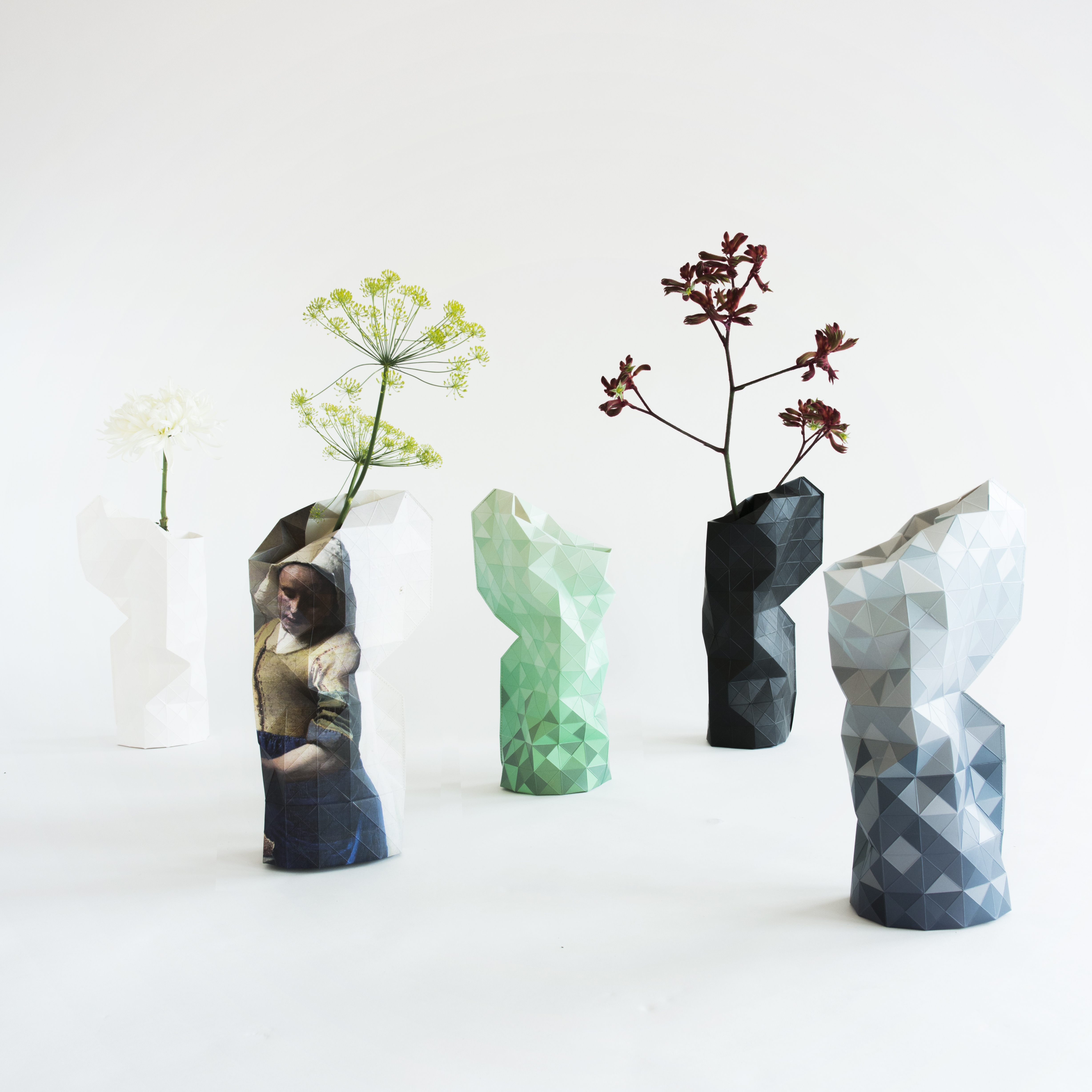
Pepe Heykoop's paper vase project. Photo by Annemarijne Bax

Pepe Heykoop’s paper vase project. Photo by Annemarijne Bax

It’s a familiar, often unfortunate equation: a designer (industrial, fashion etc.) from a wealthy country has a trend-setting idea, manufacturers it for pennies in an impoverished country and then sells it for a premium without sharing the riches with the labourers who made it.

Dutch designer Pepe Heykoop is trying to create a new paradigm. His paper-vase project is both aesthetically edgy and morally sound. It was recently shown at the largest furniture fair in the world, Salone Internazionale del Mobile in Milan, Italy, where the influential design blog Dezeen called it a “a runaway success.” The business model for the vases is helping raise a community in Mumbai out of severe poverty.
Continue reading

The Comeback: Art Deco

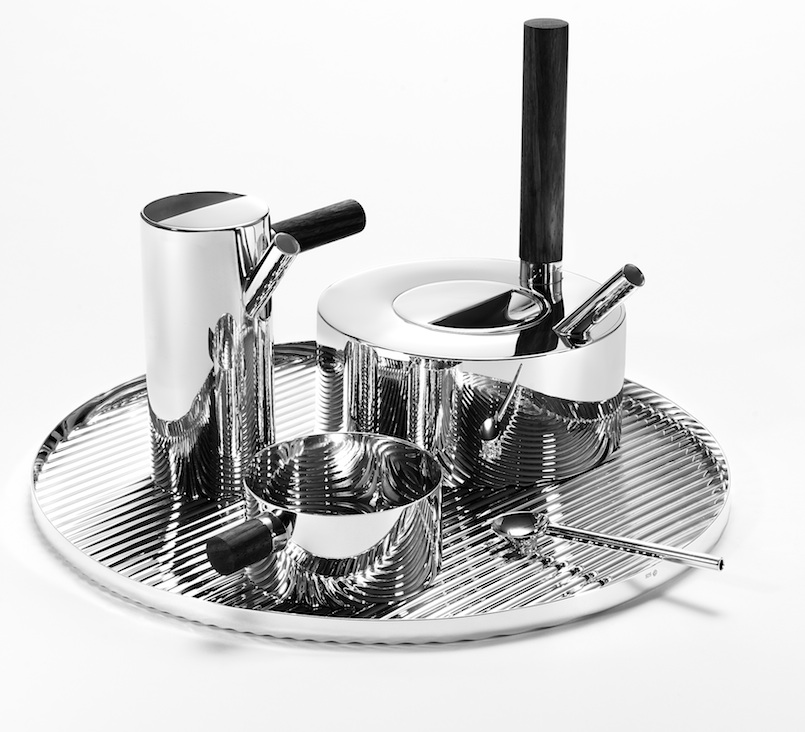
Tomas Alonso's silver tea service (photo by Craig Dillon)

Tomas Alonso’s silver tea service (photo by Craig Dillon)

Although Art Deco reached its apex of influence during the Interwar period, its rich colours, bold geometries and lavish materials (such as sterling silver and ebony) have never really disappeared from fashion.

It is, essentially, timeless. But every once and a while, our collective fascination with the movement’s decor and architecture reaches a new fever pitch. Like right now. The resurgence is the direct result of Baz Luhrmann’s blockbuster adaption of F. Scott Fitzgerald’s Great Gatsby (the sixth such adaption of the 1925 novel, which comes out this Friday). Suddenly, everyone wants an air of the Jazz Age, in their clothes (think shimmering flapper skirts) and in their decor.

Continue reading

Outside the Box: Why Cardboard is Kingly

Design objets en carton // Design cardboard objects

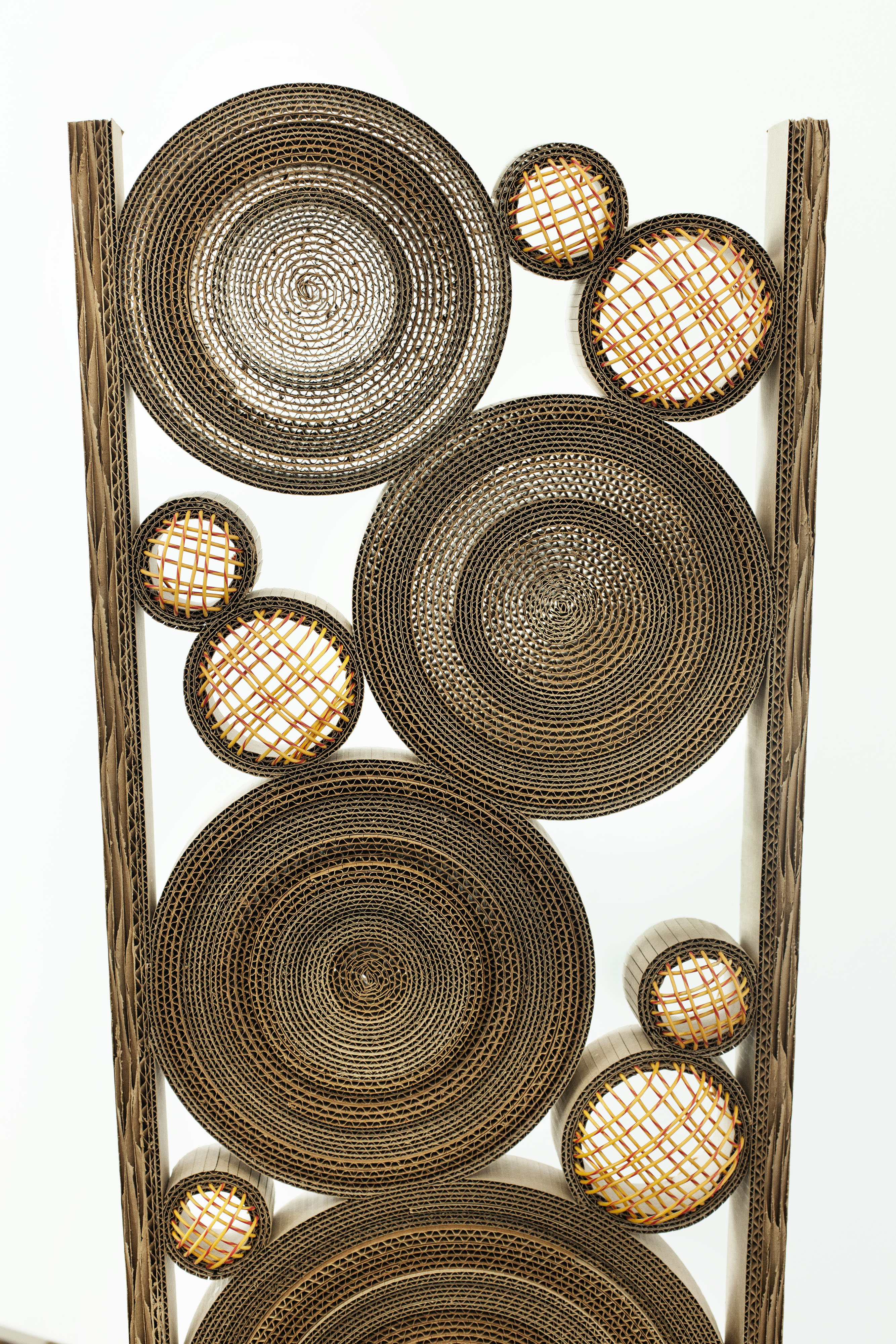
A detail of Marie-José Gustave’s cardboard chair (photo by Stephanie Lamy)

When designer Marie-josé Gustave moved to Quebec from France 15 years ago, she, not surprisingly, hauled her stuff with a bevy of cardboard boxes. But, unlike most of us, Gustave didn’t give away, store or toss the containers when she got here. She started turning them into art and decor.

“I had lots of boxes,” jokes Gustave.

The Montrealer studied clothing production, was working in textile design and long loved tactile crafts such as sewing and knitting. Like an interesting fabric or yarn, she admired cardboard’s rich, versatile texture. Depending on how it’s cut, layered and woven together, it looks like wool, woven seagrass or clay.

Continue reading

Coveted: JustPotters’ Charming Garden Markers

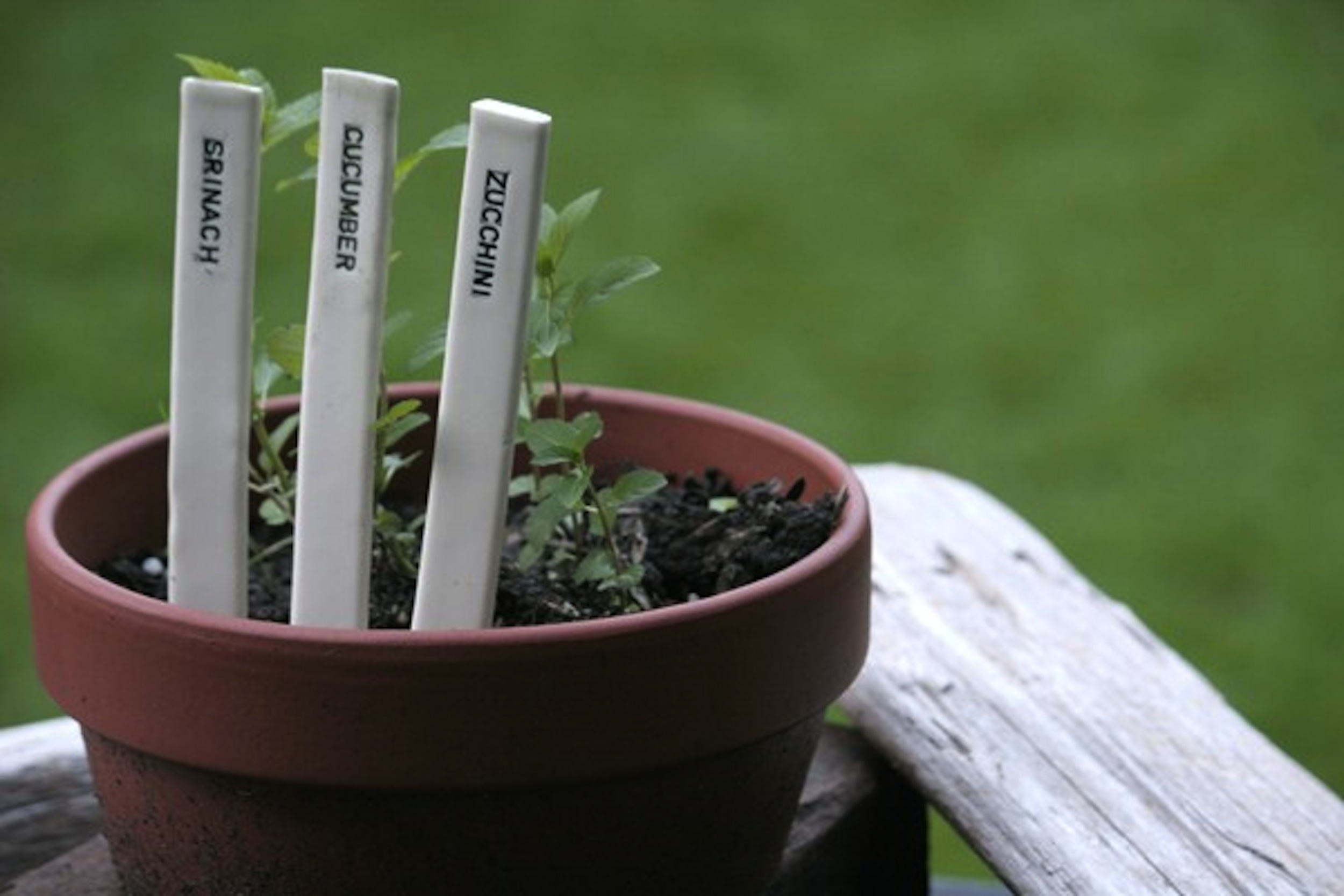
Hand-crafted ceramic garden markers

Hand-crafted ceramic garden markers

Garden markers are a must for green thumbs who can’t remember where they’ve seeded the beets versus the radishes. They’re particularly necessary before the buds start to grow in the early spring, when one, dirt-filled pot in the windowsill is indistinguishable from the next. JustPotters makes an especially handsome version — slender, ceramic stems with that perfectly-imperfect, rough-edged quality that only comes when something is hand spun. But the Vancouver-based pottery shop is laudable for more than its unique nameplates. It was started in 2006 to give people who face traditional barriers to work — mental or physical disabilities, for example, or problems with addiction — a way to make money and learn new skills. Most don’t come into the studio with a background in clay, but under the training of expert potter Jasmine Wallace — she has a Master’s degree in ceramics from the University of Minnesota and has exhibited across North America — they learn the nuances of the craft and take great pride in creating such beautiful objects. From $21. justpotters.com.

This piece originally appeared in the Globe and Mail on Thursday, April 18, 2013.

Forget Minimalism: How ‘More is More’ Made Nicky Haslam a Top Designer

Nicky Haslam at the Toronto home of Colette van den Thillart (Photo by Deborah Baic/The Globe and Mail)

Nicky Haslam at the Toronto home of Colette van den Thillart (Photo by Deborah Baic/The Globe and Mail)

The client list of British interior design legend Nicky Haslam reads like an issue of Hello! magazine. It’s packed with the bold-faced names of royals (Princess Michael of Kent), rock stars (Mick Jagger, Ringo Starr) and oligarchs (a house he did for bank magnate Pyotr Aven features the largest private collection of Russian art in the world). His social calendar – parties with Jerry Hall and Bob Geldof, posing for pictures with Kate Moss – is much the same.

Haslam’s rooms are as diamond-encrusted as the celebrities he works for. Nothing is ever too excessive or ornate.

Continue reading

Coveted: Ryan Taylor’s Babylon Pendant

Ryan's Taylor's luminous hanging garden

Ryan’s Taylor’s luminous hanging garden

A few years ago, designer Ryan Taylor’s kitchen was startling to look more like a greenhouse than a cook space. He loved having ferns, herbs and succulents around, but had run out of places to put them. So, Toronto-based Taylor decided to create a new type of planter. His hanging Babylon pendant is a resplendent way to add herbage without losing square feet. The white aluminum casing is particularly elegant. The shape is inspired by an upside flower bloom and echoes mod, ‘60s style. Plants aren’t included, but anything that can grow in shallow soil, like small orchids, moss and cacti, would do well. For anti green thumbs, the trough might make a smart place to hide keys, cards and wallets. Babylon pendant. $425. Through oniprojects.com.

This piece originally appeared in the Globe and Mail on Thursday, April 4, 2013.

Couture Drapes: Handmade Fashion Doesn’t Just Walk the Runway

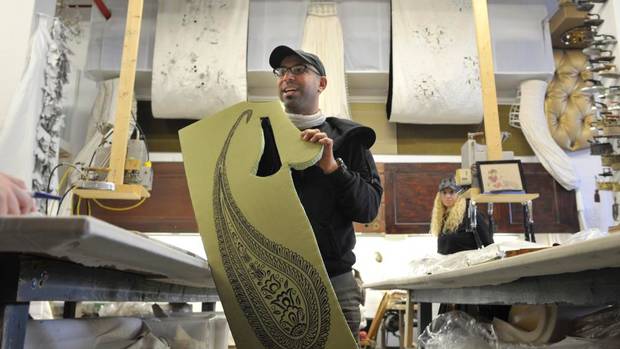
Camal Pirbhai at his downtown Toronto studio

Camal Pirbhai at his downtown Toronto studio. Photo by J.P. Moczulski

Like all couturiers, Camal Pirbhai mainly works for a small group of elite, demanding clients. He’s often asked to sign agreements stating that his design is exclusive, original and top secret. He isn’t allowed to show pictures, sketches or fabric samples of many of his projects to anyone. Even talking about the designs is off limits to ensure that an heiress or scion doesn’t have the same look as their friends.

But unlike Gaultier and Galliano, Pirbhai doesn’t apply his deft touch to evening wear and ball gowns. He makes drapes – the regal kind that transform a mere living room into an aristocratic salon or parlour. Almost everything – perfectly spaced pleats, pillowy tufts, delicate rosettes – is hand-stitched. Even the hardware is handmade. He designs his own rods, brackets and finials and has them custom-fabricated by carpenters, metal workers and glass blowers.

Continue reading

A Conversation with Design Master Giulio Cappellini

Giulio Cappellini at his Milan Showroom

Giulio Cappellini at his Milan Showroom

Even if you’ve never heard of Giulio Cappellini, or the eponymous design studio he’s run for three decades, chances are you’ve seen some of the furniture maker’s quizzically shaped, brightly hued tables, couches and cabinetry.

If not in top style mags like Elle Decor, Dwell and Architectural Digest, then on display at prestigious museums like the V&A in London, the Museum of Decorative Arts in Paris and New York’s MoMA.

Part of what has made the 59-year-old so successful is a singular ability for discovering, developing and collaborating with untapped talent: much lauded stars like Marcel Wanders, Jasper Morrison and Tom Dixon all got their first big breaks by working with the Milanese master.

When Cappellini was in Toronto recently to give a lecture at the Design Exchange, we caught up with him to talk about his sense of colour, humour and how he finds his bright young things.

You’ve got a knack for spotting fresh talent. How do you do it?

I travel a lot. I visit universities and schools. I meet a lot of people. Sometimes I just see a rough prototype or a sketch. Or sometimes I meet someone and I just think that this person can work well with Cappellini. The feeling I get for the person is very important, because sometimes it takes years between the first prototype and the final design. And I never just want to make one piece with a designer. So we need to build a strong relationship.

Continue reading

The Comeback: Cut Glass Gets a Modern Update

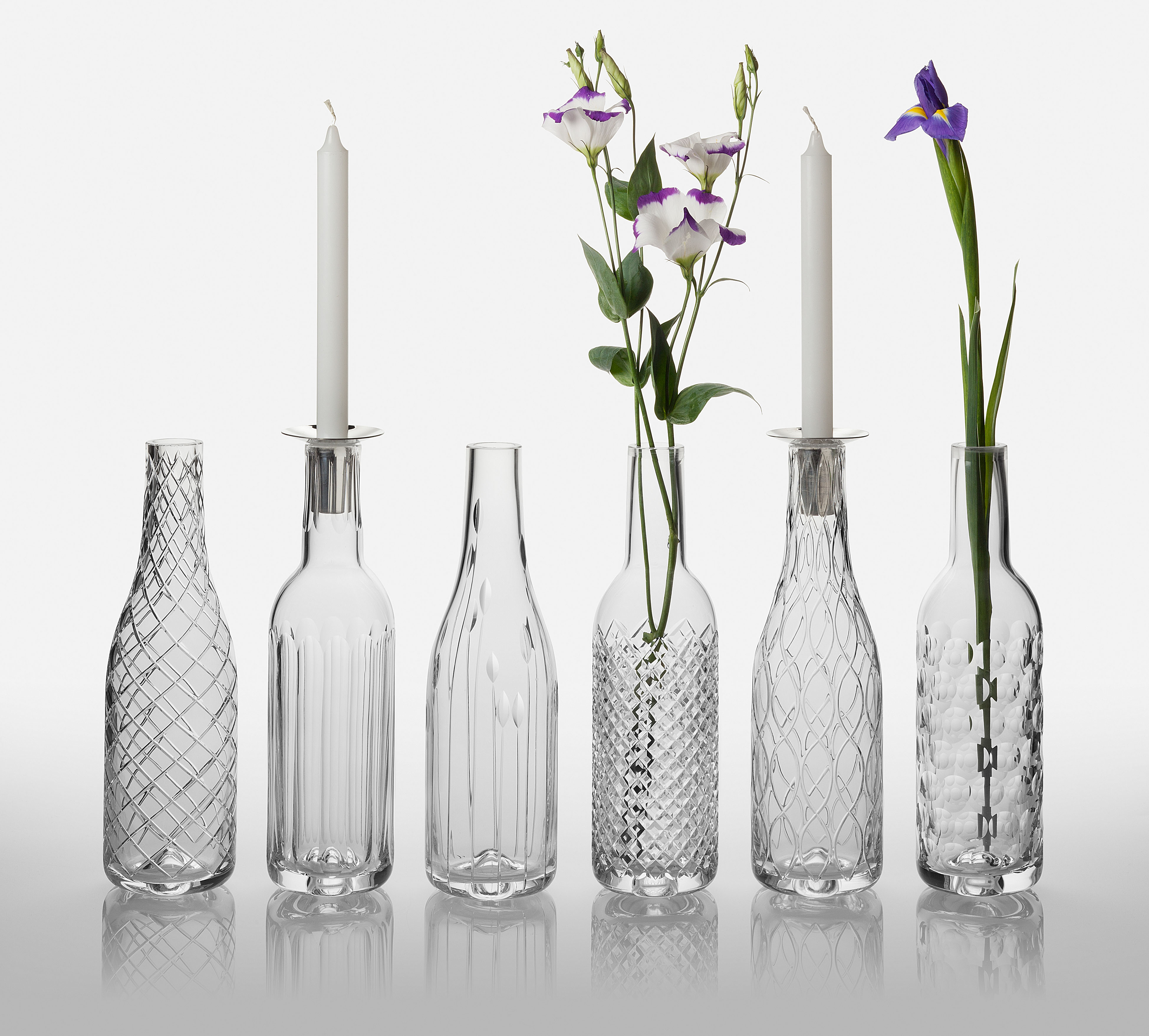
Cumbria Crystal's Bottle Vase

Cumbria Crystal’s Bottle Vases

During the Victorian era, hand-blown, intricately patterned glass was a stylish sign of wealth. European aristocrats and American tycoons used it to transform their salons into jewel boxes, lining the rooms with gleaming vases, goblets and treys.

But, similar to carriage making and shoe cobbling, the craft fell out of favour in the early 20th century, when more modern, steam-lined luxuries came into fashion. In the US, there were over 1,000 studios working with cut glass during the 1800s. By 1908, there were only 100.

Continue reading

Coveted: Brenda Watts’ French Rolling Pin

Brenda Watts' French Rolling Pin

Brenda Watts’ French Rolling Pin

A French-style rolling pin is ideal for pastry. The tapered ends pivot to work the dough into pie-crust-perfect circles, and the slender profile applies only a gentle touch, which helps keep tarts and croissants flaky. Carpenter Brenda Watts has been making them at Cattails, her Hermitage, PEI, studio, for the past decade. She started making them because her sister, who is a baker and worked at a kitchen store, wanted a French pin for herself. Watts, who studied woodworking at Holland College, uses locally harvested flame birch and brings out the wood’s naturally flamboyant grain by sanding it to a sheen then finishing it with sunflower oil and beeswax from a local beekeeper. Aspiring Julia Childs will appreciate its soft, warm grip. Everyone else will just admire how good it looks on the kitchen counter. French rolling pin. 22 “ l. x 2” dia. $50. Through shopbrendawattswoodwork.com.

This piece originally appeared in the Globe and Mail on Thursday, March 28, 2013.